Events3rd Permanent Seminar on D.T. Suzuki: Suzuki Daisetsu and Shin Buddhism
December 4th, 2026. 16:00~17:30 JST
Nanzan Institute for Religion and Culture Room 217
Suzuki Daisetsu and Shin Buddhism
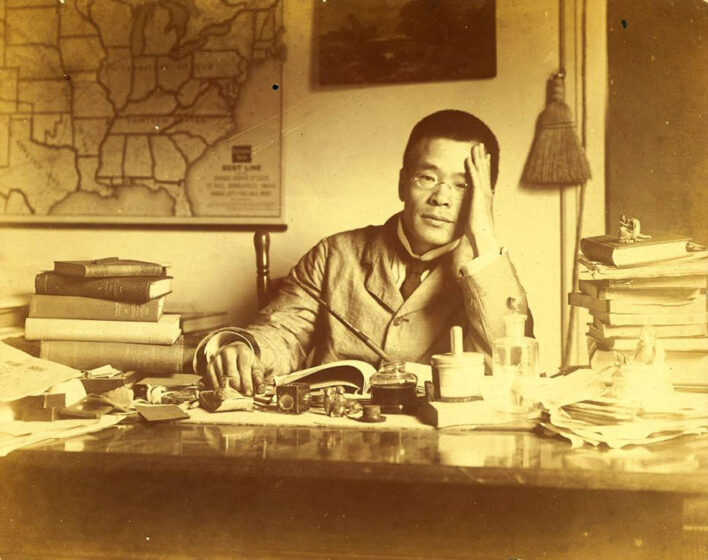
Suzuki Daisetsu 鈴木大拙 (1870-1966) is famous for playing a major role in the popularization of Zen in the West, but his works also include many references to Shin Buddhism, as well. He was born and raised in Kanazawa, a stronghold of Shin Buddhism, taught at a Shin Buddhist university for the better part of three decades, and made a partial translation of the Kyōgyōshinshō 教行信証, the magnum opus of Shinran 親鸞 (1173-1262). In Nihonteki reisei 日本的霊性, Suzuki not only praises Shinran for setting forth a form of Buddhism that is grounded in the “Great Earth” (daichi 大地), he also lauds the myōkōnin 妙好人 (devout, uneducated lay followers) of the tradition as the perfect expression of that grounded Japanese spirituality. His Mysticism Christian and Buddhist also focuses in large part on one myōkōnin, Asahara Saichi 浅原才市 (1850-1932) presenting him as the quintessential representative of Buddhist mysticism. Because of these elements in Suzuki’s biography and his focus on these Shin Buddhist figures in many of his works, Suzuki has often been taken up as an important modern interpreter of the Shin tradition, alongside his colleagues at Otani University Soga Ryōjin 曽我量深 (1875-1971) and Kaneko Daiei 金子大榮 (1881-1976). In this presentation, in order to present a more nuanced picture of the role that Shin Buddhism played in Suzuki’s thought, I will consider Suzuki’s engagement with the Shin tradition in light of the content of his first work, Shinshūkyōron 新宗教論, and point out that many of the central features of his presentation of Shin Buddhism can actually be found there. Given that this work was written over thirty years before Suzuki made any sustained study of the Shin tradition, I will argue that his interpretations should be seen primarily as employing figures and concepts within the Shin tradition to present his own view of authentic religion, rather than as explanations of the content of Shinran’s thought. That is to say, I will show that Suzuki’s work is better understood as eisegesis that projects his long-held vision onto Shinran and the myōkōnin rather than Shin exegesis.
Program: 16:00-17:00: Suzuki Daisetsu and Shin Buddhism
17:00-17:30: Discussion
Moderator: Federica SGARBI (Doshisha University)
This workshop will take place in English. It will be possible to ask questions using other languages.
This workshop is held under the patronage of: Consulate General of Japan in Milan Italian Buddhist Union Research Center (Centro Ricerche Unione Buddhista Italiana) Italian Society for Intercultural Philosophy (Società Italiana di Filosofia Interculturale)
For the zoom link to participate online, please contact us