Thomas P. Kasulis
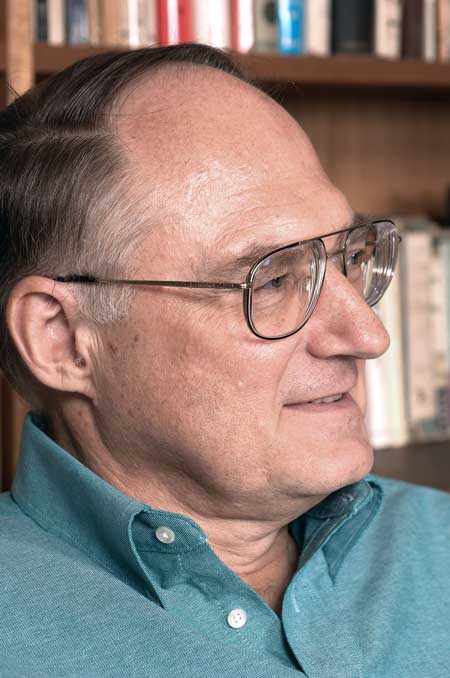
In his undergraduate philosophy thesis at Yale in 1970, Tom Kasulis examined Western attempts to characterize Buddhist enlightenment. Since then, he has continued to explore the interplay among cultural paradigms, the variety of religious practices, and the diverse forms of philosophical analysis. To support his comparative interests, Kasulis took an M.Phil. degree in Western philosophy from Yale, an M.A. degree in Asian philosophy from the University of Hawai'i, and a Ph.D. in philosophy from Yale in 1975. His doctoral dissertation showed that Zen Buddhist discourse is not the irrational, anti-intellectual gibberish that various commentators had assumed. Understood in its cultural context and in its performative function within a rigorous discipline, it effects and displays personal transformation. Zen embodies a philosophical anthropology arising from centuries of introspective analysis and philosophical argument. The dissertation traced the roots of that theory of personal flourishing back to India and China, as well as Japan.
Kasulis is currently University Distinguished Scholar and Professor Emeritus of Comparative Studies at the Ohio State University and has previously held permanent or visiting positions at the Universities of Hawai'i and Chicago, Northland College, and Harvard, Osaka, Tokyo, and Ōtani Universities. His scholarly writings have appeared in twelve languages. His major books include Zen Action/Zen Person; Intimacy or Integrity: philosophy and cultural difference (the Gilbert Ryle Lectures); Shintō: the way home; Japanese Philosophy: a sourcebook (co-editor); and Engaging Japanese Philosophy: a short history. He has been president of both the American Society for the Study of Religion and the Society for Asian and Comparative Philosophy.
In his retirement, he continues to bring a comparative and interdisciplinary approach to his lectures and writings related to alternative forms of knowing as ways of engaging the world spiritually, philosophically, ethically, and aesthetically.