Philosophers
-
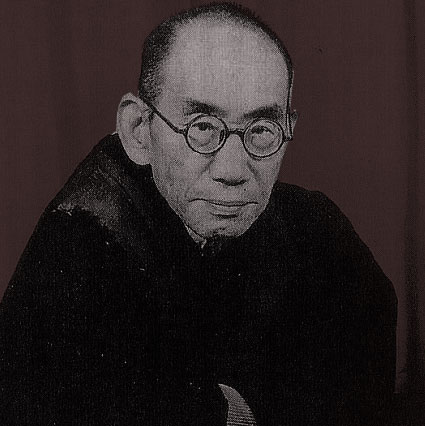
Born 19 May 1870 in Unoke, Ishikawa Prefecture, Nishida Kitarō was the founder of a philosophical movement later known as the Kyoto School. His thinking covered a wide range of philosophical topics. His most well-known concepts, such as the “place of absolute nothingness” or “absolutely contradictory self-identity,” spanned the boundries between classical Western philosophy and traditional Eastern thought, particularly Buddhist and Taoist. He died 7 June 1945 in Kamakura.
This database of Nishida's works lists both partial and complete translations in multiple languages. Please help expand the list by contacting us here.
-
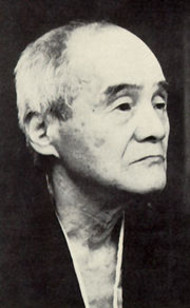
Born in Tokyo on February 3, 1885, he studied at the Imperial University of Tokyo, first mathematics, and then philosophy and literature. After completing his studies, he worked as a lecturer at the Imperial University of Tohoku in Sendai while preparing his doctoral dissertation on the philosophy of mathematics, which he submitted to the Imperial University of Kyoto in 1918. At the invitation of Nishida—with whom he shared not only an interest in scientific thought but also common problems and concepts—he began working at Kyoto University in 1919. From 1922 to 1924, he went to study in Germany, first in Berlin under Riehl and then in Freiburg with Husserl. It was in Freiburg that he met Heidegger and Oskar Becker. After taking over Nishida’s chair in 1928, he broke with his mentor in 1930, proposing his own original dialectical interpretation of the concept of absolute nothingness and, beginning in 1934, developing the so-called “Logic of the Species” in dialogue with the philosophies of Hegel and Marx. Caught up in the events of World War II, Tanabe retired in 1945 and withdrew to Kitakaruizawa, where he devoted himself to developing his thought, which took the form of a philosophy as metanoetics. The theme of religion—in particular Christianity and Buddhism—occupied him until his final days. He died in Kitakaruizawa on April 29, 1962.
This database ofTanabe's works lists both partial and complete translations in multiple languages. Please help expand the list by contacting us here.
-
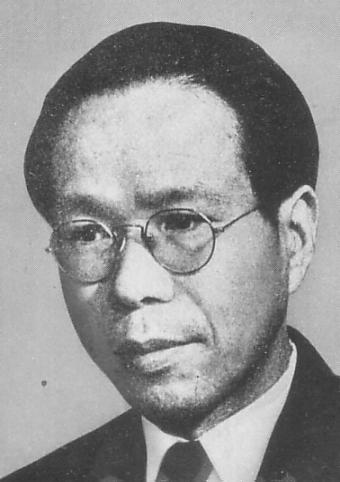
Born in Hiraimura, Hyogo Prefecture on 28 December 1896 (although his birth was registered on 5 January 1897), he enrolled in Kyoto University to study with Nishida Kitarō, having been deeply impressed by his book An Inquiry into the Good. From 1922 to 1925, he studied first in Germany with Heinrich Rickert in Heidelberg and Martin Heidegger in Marburg, where he met, among others, Karl Löwith and Hans-Georg Gadamer, and then in Paris, France to work on Pascal. In 1927, he became a professor at Hōsei University in Tokyo. Influenced by Heidegger, he developed a humanistic interpretation of Marx’s thought. In 1930, he was accused of aiding the Communist Party, arrested, and imprisoned for several months. Forced to leave academia, he began working as a journalist and in publishing. From 1938 to 1940, he was a member of the Shōwa Research Association, while devoting himself to the development of what would become his masterpiece, The Logic of Imagination, which remained unfinished. While working on an interpretation of Shinran’s thought, he was arrested again for political reasons in 1945. He died in prison in Tokyo a few days after the end of the war on 26 September 1945.
This database of Miki's works lists both partial and complete translations in multiple languages. Please help expand the list by contacting us here.
-
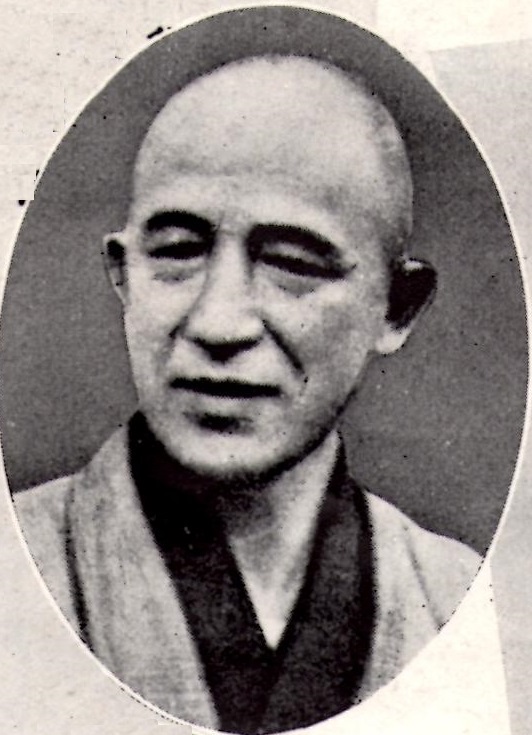
Born 27 February 1900 in Noto, Ishikawa Prefecture, was a student of Nishida and Tanabe. In the early part of his career he devoted himself in particular to the study of authors such as Bergson, Schelling, Nietzsche, as well as Christian mysticism and Meister Eckhart. After analyzing the phenomenon of nihilism in the West and in Japan, in the latter part of his career he continued his dialogue with philosophy, particularly Hegel, as well as engaging with Buddhist thought, especially Zen and Kegon, and Chinese thought and poetry. He died 24 November 1990 in Kyoto.
This database of Nishitani's works lists both partial and complete translations in multiple languages. Please help expand the list by contacting us here.
-
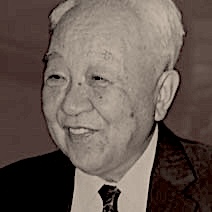
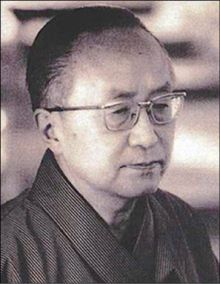
Born 2 February 1913 in Yokkaichi, Mie Prefecture, Takeuchi Yoshinori studied at Kyoto University, primarily under the guidance of Hajime Tanabe, and became professor at the same university in 1948, where he remained until his retirement in 1976. Trained both as a philosopher and a monk of Shin Buddhism, he placed Shinran’s teachings at the center of his research, a focus he shared in particular with Miki Kiyoshi and Tanabe Hajime, interpreting Buddhist thought through dialogue with Western philosophy, especially Hegel and German phenomenology and existentialism. He also helped introduce Japanese Buddhist philosophy to an international audience through his English-language publications. He died on 12 April 2002.
This database of Takeuchi's works lists both partial and complete translations in multiple languages. Please help expand the list by contacting us here.